Oct 9th, 2026
Motorcycle Accidents in California With Fault, Injuries, and Insurance Challenges
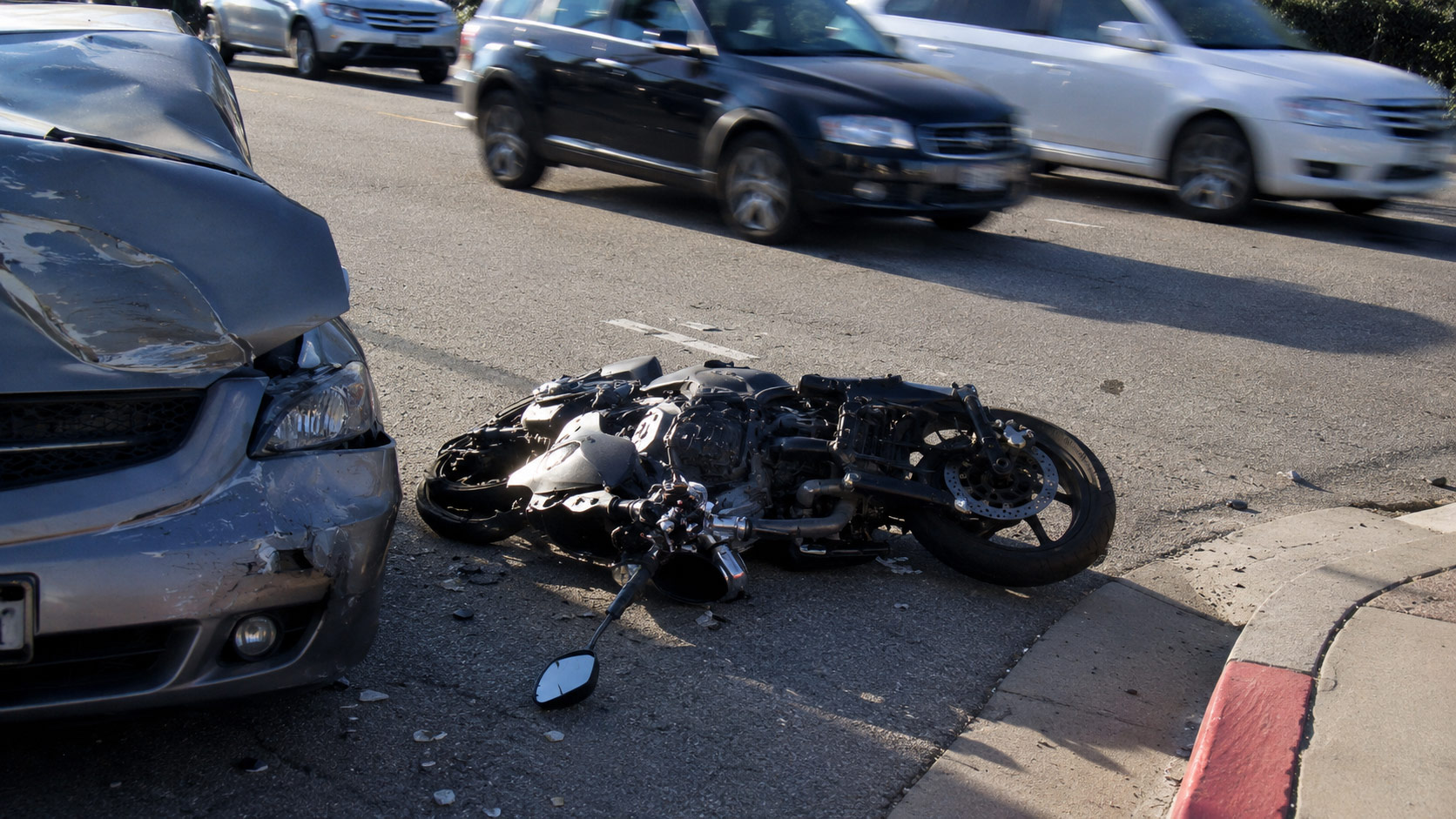
Motorcyclists face a level of risk on California roads that drivers in passenger vehicles never have to think about. There is no frame, no airbag, and no crumple zone standing between a rider and the pavement, which is why crashes that a car driver might walk away from often leave a motorcyclist with serious, life-altering injuries.
Common Causes of Motorcycle Crashes
Motorcycle accidents rarely come down to the rider’s own error. Most involve a driver who failed to see the motorcycle or misjudged its speed and distance.
- Left-turning drivers who pull in front of an oncoming motorcycle
- Lane changes made without checking blind spots for a motorcycle’s smaller profile
- Tailgating or following too closely, since motorcycles can stop faster than cars
- Road hazards like potholes, gravel, or uneven pavement that pose little risk to a car but can throw a rider
- Distracted or impaired driving, which cuts a driver’s reaction time when it matters most
How Fault Gets Determined
California follows a pure comparative negligence rule, which means a rider can still recover compensation even if partially at fault for the crash, though the award gets reduced by that percentage of fault. A rider found 20 percent responsible for an accident, for example, can still recover 80 percent of their total damages from the other driver.
This system makes fault investigation critical, since insurance companies frequently try to shift blame onto the motorcyclist. Riders are sometimes unfairly assumed to have been speeding or lane splitting recklessly, even when neither is true. Evidence like traffic camera footage, witness statements, skid marks, and vehicle damage patterns often tells a very different story than the one an insurer wants to write.
Injuries That Follow Riders Long After the Crash
Motorcycle and other roadway injury claims tend to be more severe and more expensive to treat than injuries from a typical car accident. Common outcomes include road rash requiring skin grafts, traumatic brain injuries, spinal cord damage, broken bones, and limb amputation. Even riders wearing a helmet and full protective gear can suffer permanent injuries that affect their ability to work and require months or years of ongoing medical care.
These long-term costs are exactly why insurance companies fight so hard to minimize motorcycle claims. A quick lowball offer made in the days after a crash rarely accounts for future surgeries, physical therapy, or lost earning capacity down the road.
Why Insurance Companies Treat Motorcycle Claims Differently
Insurers often approach motorcycle claims with an unspoken bias, assuming riders are more reckless than other drivers even when the facts say otherwise. That bias can show up as unreasonably low settlement offers, aggressive questioning about the rider’s experience and gear, or attempts to argue that lane splitting, which is legal in California under specific conditions, was somehow improper.
Riders dealing with a serious injury after a crash are often facing mounting medical bills at the exact moment an insurance adjuster is pushing for a fast, undervalued settlement. Working with an experienced Los Angeles motorcycle accident lawyer who understands how these claims get valued, and how to push back against an insurer’s default skepticism toward motorcyclists, can make a significant difference in the outcome. A free consultation can clarify what a claim may be worth before any settlement offer gets accepted.